


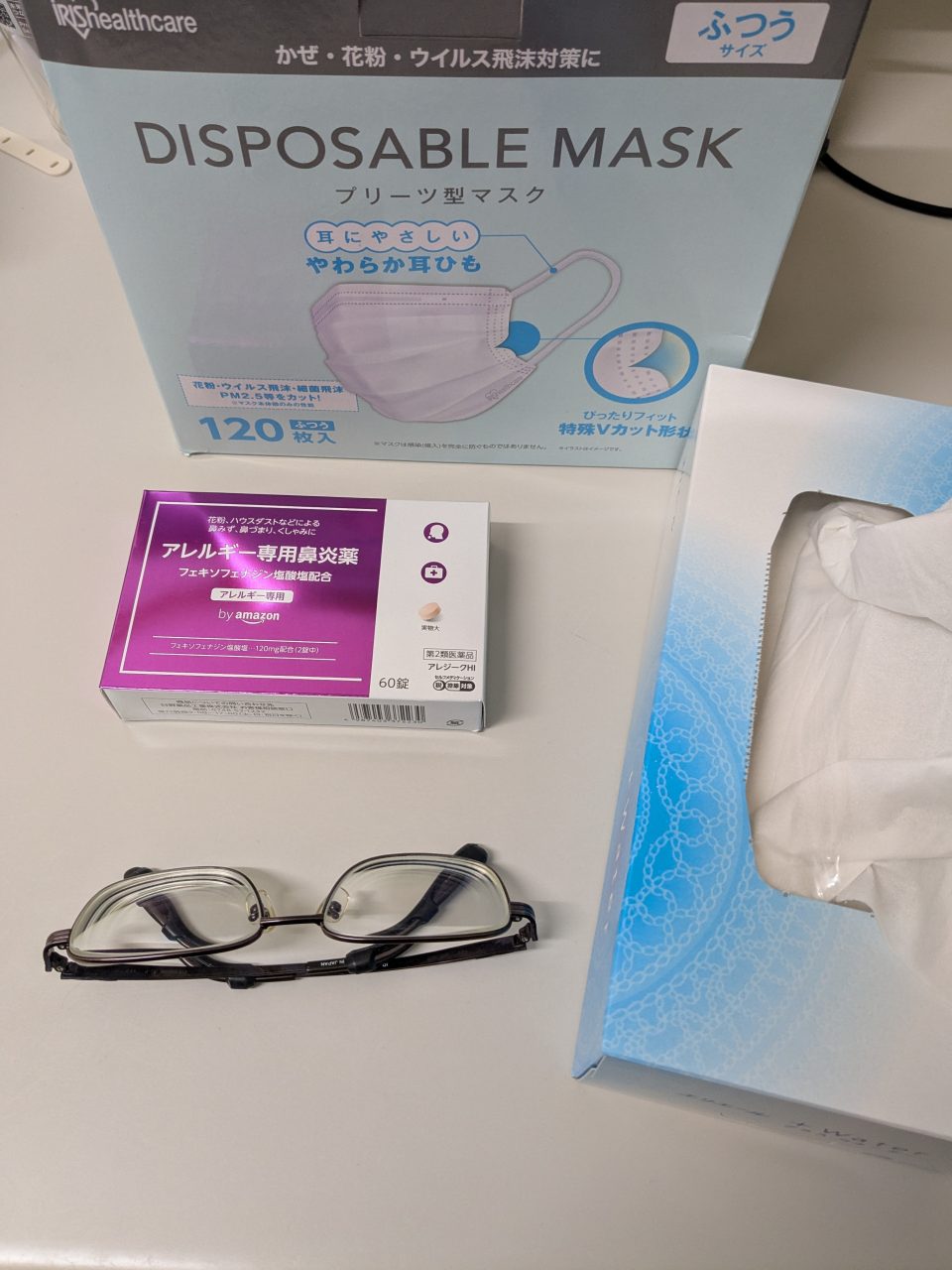
こんにちは!山梨大学工学部コンピュータ理工学科4年の木島です。
アネックス隣の学生寮「芙蓉寮」に住んでいます。
日本に留学してテレビを見ると、このようなニュースが流れていることに気づくかもしれません。
「今年の花粉(かふん)の飛散量(飛んでいる量)に気をつけてください」
あるいは、学生同士でこんな会話を聞いたことはありませんか?
「今日は花粉がやばいね」 「薬のせいで眠くて、授業中に寝ちゃいそう」
この「花粉」とは一体何でしょうか。何か難しい医療用語でしょうか。
今回は、日本の「国民病」とも呼ばれる花粉症(かふんしょう)についてご紹介します。
花粉症について
花粉症は、植物の花粉(アレルゲン)が原因で、鼻水やくしゃみ、目のかゆみ、喉の痛みなどのアレルギー症状を引き起こす病気です。[1]
症状だけ見ると、「なんだ、風邪と同じで大したことない」と感じるかもしれません。
症状が軽い人はそうかもしれませんが、重症の人にとっては深刻です。花粉が多く飛ぶ時期には、あまりのつらさに「外に出るのが嫌だ」と感じてしまうほどです。
経済への影響も大きいです。
パナソニックの調査[2]によると、花粉症による集中力の低下などを含めた経済損失は、一日あたりおよそ2,320億円にものぼるそうです。
興味深いことに、留学生が来日してすぐに花粉症になるケースは少ないようです。
ある調査によると、来日してから平均して4年ほど経過してから花粉症を発症するというデータがあります[3]。
今は大丈夫でも、大学生活の後半で急になるかもしれません。
もし花粉症になったら、どうしたらいいでしょうか。 ここでは、症状を抑えるための対策をご紹介します。
⚠️注意点⚠️
花粉症の症状は、風邪や他の病気と似ています。
自分で判断せず、病院に行って医師の指導を受けてください。
花粉症の対策方法
- マスクをつける
- 花粉を吸い込まないことが最も大切です。できれば、隙間のない「花粉症対策用」のマスクを使いましょう。
- 帰宅時、服を叩く
- 花粉は服につきやすいです。家に入る前に玄関先で服を軽く叩き、部屋の中に持ち込まないようにしましょう。
- 洗濯物は部屋干し
- 外に干すと花粉がついてしまいます。部屋干しや乾燥機を使ったほうが安心です。
- 定期的に掃除を行う
- 窓やドアの開閉で、花粉は部屋の中に入ってきます。こまめに掃除機や拭き掃除をしましょう。
- 規則正しい生活
- 免疫力(病気と戦う力)を落とさないためにも、しっかり寝て、健康的な生活を送ることが大切です。
治療としての薬
病院で花粉症だと診断された場合、飲み薬(内服薬)や点鼻薬(鼻スプレー)、目薬などが処方されます(出されます)。
これらの薬を使っても、人によっては症状が完全になくなるわけではありません。
しかし、つらい症状をかなり抑えることができます。 もし過去に薬を使ったことがあるなら、花粉が本格的に飛び始める1週間くらい前から薬を飲み始めましょう。
症状が出てから飲むよりも、効果が高くなります。
まとめ
日本のように、多くの国民が「花粉」に悩まされている国は珍しいかもしれません。 初めて花粉症になると、「なぜ急に?」と不思議な気持ちになると思います。
ぜひ今のうちに花粉症の知識を身につけて、快適な春を迎えてください。
# 参考文献
[1]内閣府政府広報室. (2025年8月22日). “花粉症で悩む皆さま! 早めの治療や予防行動を!,” 政府広報オンライン. [2025年12月13日アクセス]. 参照元: https://www.gov-online.go.jp/article/201102/entry-8208.html
[2]パナソニック株式会社. (2025年2月6日). “花粉シーズン本番! パナソニック「花粉症による労働力低下の経済損失額2025」を発表 〜その経済損失額は、1日あたり「約2,320億円」~ いますぐ始めたい4つの花粉対策,” PR TIMES. [2025年12月13日アクセス]. 参照元: https://prtimes.jp/main/html/rd/p/000001014.000024101.html
[3]石井 彩子, 宇田川 友克, 柳 清, 今井 透, “在日外国人のスギ花粉症実態調査,” 耳鼻咽喉科展望, vol. 46, no. 4, pp. 279–283, 2003.
“Life in Japan #2” “Kafunsho”: A Mysterious Condition You Might Hear About When You Come to Japan
Hello! I’m Kijima, a fourth-year student in the Department / Course of Computer Science and Engineering, University of Yamanashi.
I live in the student dormitory “Fuyo Dormitory,” next to the Annex.
When you study abroad in Japan and watch TV, you may notice news like this being broadcast.
“Please be careful about the amount of pollen this year.”
Or have you ever heard conversations like this among students?
“Pollen is really bad today.”
“I’m sleepy because of the medicine, and I feel like I’m going to fall asleep in class.”
So what exactly is this “pollen”?
Is it some kind of difficult medical term?
This time, I will introduce hay fever (kafunsho), which is sometimes called Japan’s “national ailment.”
About Hay Fever
Hay fever is a disease in which plant pollen causes allergy symptoms such as a runny nose, sneezing, itchy eyes, and a sore throat. [1]
If you look only at the symptoms, you might feel, “It’s not a big deal.”
That may be true for people with mild symptoms, but for people with severe symptoms it is serious.
During seasons when a lot of pollen is in the air, it can be so painful that you may feel, “I don’t want to go outside.”
The impact on the economy is also significant.
According to a Panasonic survey [2], the economic loss caused by hay fever—including reduced concentration—amounts to about 232 billion yen per day.
Interestingly, it seems that there are few cases in which international students develop hay fever soon after coming to Japan.
According to one survey, there is data showing that hay fever develops, on average, about four years after coming to Japan. [3]
Even if you are fine now, it might suddenly happen in the latter half of your university life.
If you develop hay fever, what should you do?
Here, I will introduce measures to reduce symptoms.
⚠️Important Note⚠️
Hay fever symptoms are like those of a cold or other illnesses.
Do not judge by yourself; go to a hospital and follow a doctor’s guidance.
How to Prevent/Reduce Hay Fever Symptoms
- Wear a mask
The most important thing is not to inhale pollen.
If possible, use a “hay fever prevention” mask that has no gaps.
- When you get home, pat down your clothes
Pollen sticks easily to clothing.
Before entering your home, lightly pat down your clothes at the entrance so you don’t bring pollen into your room.
- Dry laundry indoors
If you hang laundry outside, pollen will stick to it.
It is safer to dry it indoors or use a dryer.
- Clean regularly
Pollen enters your room when you open and close windows and doors.
Vacuum and wipe frequently.
- Maintain a regular lifestyle
To avoid lowering your immune system , it is important to sleep well and live a healthy lifestyle.
Medicines as Treatment
If a hospital diagnoses you with hay fever, oral medications, nasal sprays, eye drops, and so on will be prescribed.
Even if you use these medicines, depending on the person, the symptoms will not necessarily disappear completely.
However, they can significantly reduce painful symptoms.
If you have used medicine in the past, start taking it about one week before pollen starts flying in earnest.
It is more effective than taking it after symptoms appear.
Summary
Like Japan, it may be rare to find a country where so many people are troubled by “pollen.”
If you get hay fever for the first time, I think you will feel puzzled, like, “Why all of a sudden?”
Please learn about hay fever now and welcome a comfortable spring.
# 参考文献
[1]内閣府政府広報室. (2025年8月22日). “花粉症で悩む皆さま! 早めの治療や予防行動を!,” 政府広報オンライン. [2025年12月13日アクセス]. 参照元: https://www.gov-online.go.jp/article/201102/entry-8208.html
[2]パナソニック株式会社. (2025年2月6日). “花粉シーズン本番! パナソニック「花粉症による労働力低下の経済損失額2025」を発表 〜その経済損失額は、1日あたり「約2,320億円」~ いますぐ始めたい4つの花粉対策,” PR TIMES. [2025年12月13日アクセス]. 参照元: https://prtimes.jp/main/html/rd/p/000001014.000024101.html[3]石井 彩子, 宇田川 友克, 柳 清, 今井 透, “在日外国人のスギ花粉症実態調査,” 耳鼻咽喉科展望, vol. 46, no. 4, pp. 279–283, 2003.